


PLC vs SCADA vs DCS

Choosing the correct industrial control system is one of the most critical decisions in any au- tomation project. Programmable Logic Controllers (PLCs), Supervisory Control and Data Acquisition (SCADA) systems, and Distributed Control Systems (DCS) each serve distinct roles within modern industrial plants. Selecting the wrong architecture can lead to increased downtime, higher maintenance costs, and limited scalability.

Industrial Control System Hierarchy

  • SCADA / DCS Operator Stations
  • PLC Controllers
  • Sensors, Motors, Valves, Actuators
PLC vs SCADA vs DCS

Programmable Logic Controller (PLC)

A Programmable Logic Controller is a rugged industrial computer designed for deterministic, high-speed control of machines and processes. PLCs operate reliably in harsh environments involving dust, vibration, electrical noise, and temperature variations. They are programmed using IEC 61131-3 languages such as Ladder Logic, Function Block Diagram, and Structured Text.

PLCs interface directly with digital and analog I/O to control motors, conveyors, valves, robotic systems, and packaging machines. Their modular architecture allows easy expansion and scalability.

Leading PLC Brands and Products

PLCs are widely used in discrete manufacturing industries such as automotive, food pro- cessing, material handling, and CNC machinery.
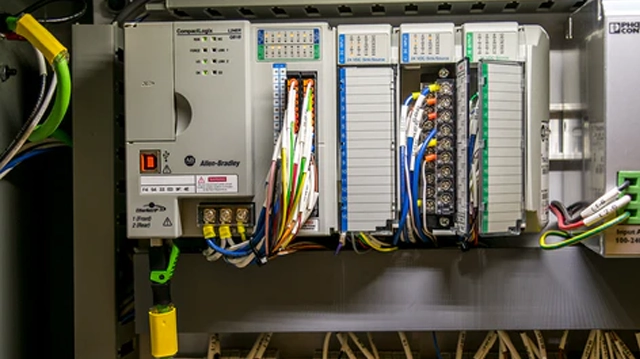
Programmable Logic Controller

Supervisory Control and Data Acquisition (SCADA)

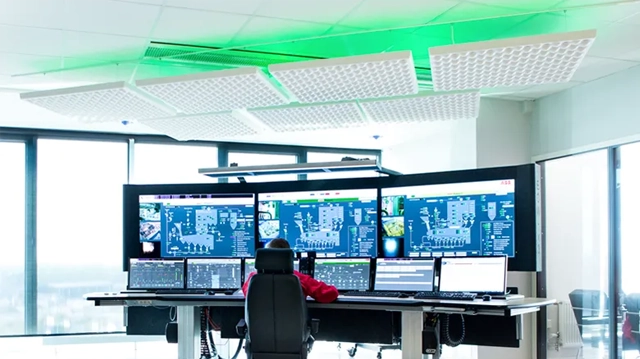
SCADA systems operate at the supervisory level and focus on monitoring, visualization, alarm management, and data logging. Unlike PLCs, SCADA systems do not directly control field devices; instead, they communicate with PLCs and RTUs to collect real-time process data. SCADA platforms run on industrial PCs or servers and are ideal for applications requiring centralized monitoring across multiple machines or remote sites.

Major SCADA Platforms

  • AVEVA Wonderware InTouch and System Platform
  • Ignition by Inductive Automation
  • Siemens WinCC
  • GE Digital iFIX and CIMPLICITY

SCADA systems are commonly used in water and wastewater treatment plants, power dis- tribution networks, oil and gas pipelines, and infrastructure projects.

Supervisory Control and Data Acquisition (SCADA)

Distributed Control System (DCS)

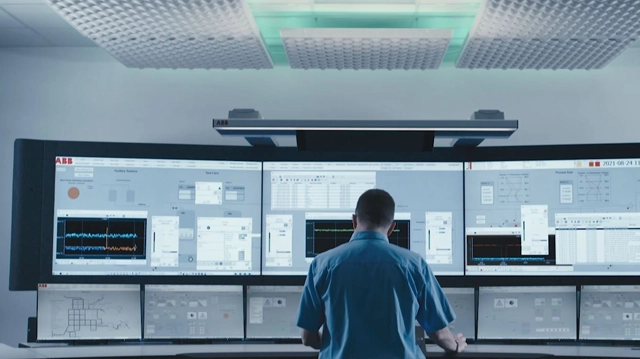
A Distributed Control System is designed for large-scale, continuous, and process-oriented in- dustries. Unlike PLC-SCADA architectures, DCS platforms provide tightly integrated control, visualization, redundancy, and safety features within a single system.

DCS systems are built with high availability at their core and support advanced process control, batch management, and integrated safety systems.

Major DCS Platforms

  • Emerson DeltaV
  • Honeywell Experion PKS
  • Siemens PCS 7
  • Yokogawa CENTUM VP

DCS solutions are dominant in industries such as oil and gas, power generation, chemicals, and petrochemicals.

Distributed Control System

PLC vs SCADA vs DCS: Key Comparison

Aspect PLC SCADA DCS
Primary Role Machine control Monitoring and supervision Integrated plant control
Scale Single machine or cell Multiple systems or sites Entire plant
Redundancy Optional Server-based Built-in
Control Type Discrete / Fast logic Supervisory only Continuous / Process
Typical Industries Manufacturing Utilities, Infrastructure Oil & Gas, Power

Why Choose Epoch International for Siemens Automation Products

Choosing the right supplier is critical for automation reliability. At Epoch International, we support industries with more than just product supply.

What Sets Us Apart:

  • 100% genuine Siemens PLCs, HMIs, and VFDs
  • Global sourcing with fast response times
  • Support for obsolete and hard-to-find models
  • Technical guidance for correct product selection
  • Trusted by industrial customers worldwide

We help keep automation systems running even when parts are discontinued or urgently required.

How to Choose the Right Control System

The selection of a control system depends on process type, plant size, safety requirements, scalability, and lifecycle support. Discrete manufacturing environments typically benefit from PLC-based systems combined with SCADA for visualization. Continuous and hazardous pro- cesses require the robustness and redundancy of a DCS.

Hybrid architectures are increasingly common, combining PLCs for machine control with SCADA for plant-wide monitoring and analytics using OPC UA and Industrial Ethernet.

How Epoch International Supports Control Systems

Epoch International provides complete lifecycle support for PLC, SCADA, and DCS systems. Our services include automation component supply, professional repair and troubleshooting, spare parts sourcing for obsolete systems, and technical support for modernization projects. With expertise across leading global brands, Epoch International helps industrial customers reduce downtime, extend system life, and make informed decisions when repairing, replacing, or upgrading control systems.

Conclusion

Understanding the differences between PLC, SCADA, and DCS architectures is essential for building reliable, scalable, and efficient automation systems. By selecting the right technology and partnering with experienced service providers like Epoch International, plants can achieve higher productivity, improved reliability, and long-term operational success.

Didn't Find What You Were Looking For?
Let Us Help You

Contact Us Now