




Introduction
Imagine a busy manufacturing plant, a bustling port, or a large construction site. Every day, cranes lift and move tons of materials that keep operations running smoothly. When a crane performs well, most people hardly notice it. But when it breaks down or operates unsafely, the impact can be immediate—production stops, deadlines slip, and safety risks increase.
For years, crane operators and maintenance teams have relied on experience and routine inspections to keep equipment running. While these methods are still important, modern indus-tries are looking for smarter ways to improve safety and reduce unexpected downtime. That’s where automation comes in.
Today, automated crane systems are helping businesses work more efficiently by reducing human error, improving equipment performance, and providing real-time insights into crane health. Whether it’s an overhead crane in a factory or a container crane at a port, automation is changing the way cranes operate.
Why Traditional Crane Operations Face Challenges
Operating a crane is a demanding job. Operators often work in fast-paced environments where precision and safety are critical. Even the most experienced professionals can face challenges such as load sway, limited visibility, equipment wear, and unexpected mechanical failures.
In many facilities, a single crane breakdown can disrupt an entire production schedule. Maintenance teams are then forced into reactive repairs, often resulting in costly downtime and rushed troubleshooting.
As industries become more competitive, businesses can no longer afford frequent interrup-tions. They need crane systems that are not only powerful but also intelligent.
How Automation Improves Safety
Helping Operators Lift with Confidence
One of the biggest advantages of automation is its ability to monitor lifting operations in real time. Modern crane systems can continuously measure load weight and alert operators before unsafe conditions occur.
Instead of relying solely on manual judgment, operators receive accurate information that helps them make safer decisions. In some cases, the system can even prevent an overload lift from taking place altogether.
Reducing the Risk of Collisions
In large factories, warehouses, and ports, multiple cranes may be operating in the same area. Without proper safeguards, collisions can cause serious equipment damage and create dangerous situations for workers.
Automated anti-collision systems act like an extra set of eyes. They constantly monitor crane positions and movement paths, helping prevent accidents before they happen.
Smoother Movements Mean Safer Operations
Anyone who has watched a heavy load swing during lifting understands the risks involved. Automated motion control systems and Variable Frequency Drives (VFDs) allow cranes to start, stop, and move more smoothly.
The result is better load control, more accurate positioning, and a safer working environment for everyone nearby.
How Automation Improves Reliability
Fixing Problems Before They Become Failures
One of the most valuable features of modern crane automation is predictive maintenance.
Rather than waiting for a motor, brake, or gearbox to fail, sensors continuously monitor equipment condition. If unusual vibration, temperature changes, or performance issues are detected, maintenance teams can investigate early.
This proactive approach helps prevent unexpected breakdowns and allows repairs to be scheduled at convenient times.
Extending Equipment Life
Cranes represent a significant investment, and every facility wants to maximize the lifespan of its equipment.
Automation helps reduce unnecessary stress on mechanical and electrical components by ensuring smoother operation. Over time, this can lead to fewer repairs, lower maintenance costs, and longer service life.
Better Visibility for Maintenance Teams
Modern automation systems provide valuable data that helps maintenance personnel understand exactly how a crane is performing.
Instead of guessing where a problem might be, technicians can access real-time diagnostics and historical performance data. This means faster troubleshooting and more effective maintenance planning.
Real-World Benefits Across Industries
The benefits of crane automation can be seen across many industries.
- Manufacturing Facilities: Automated cranes help move materials more accurately and efficiently.
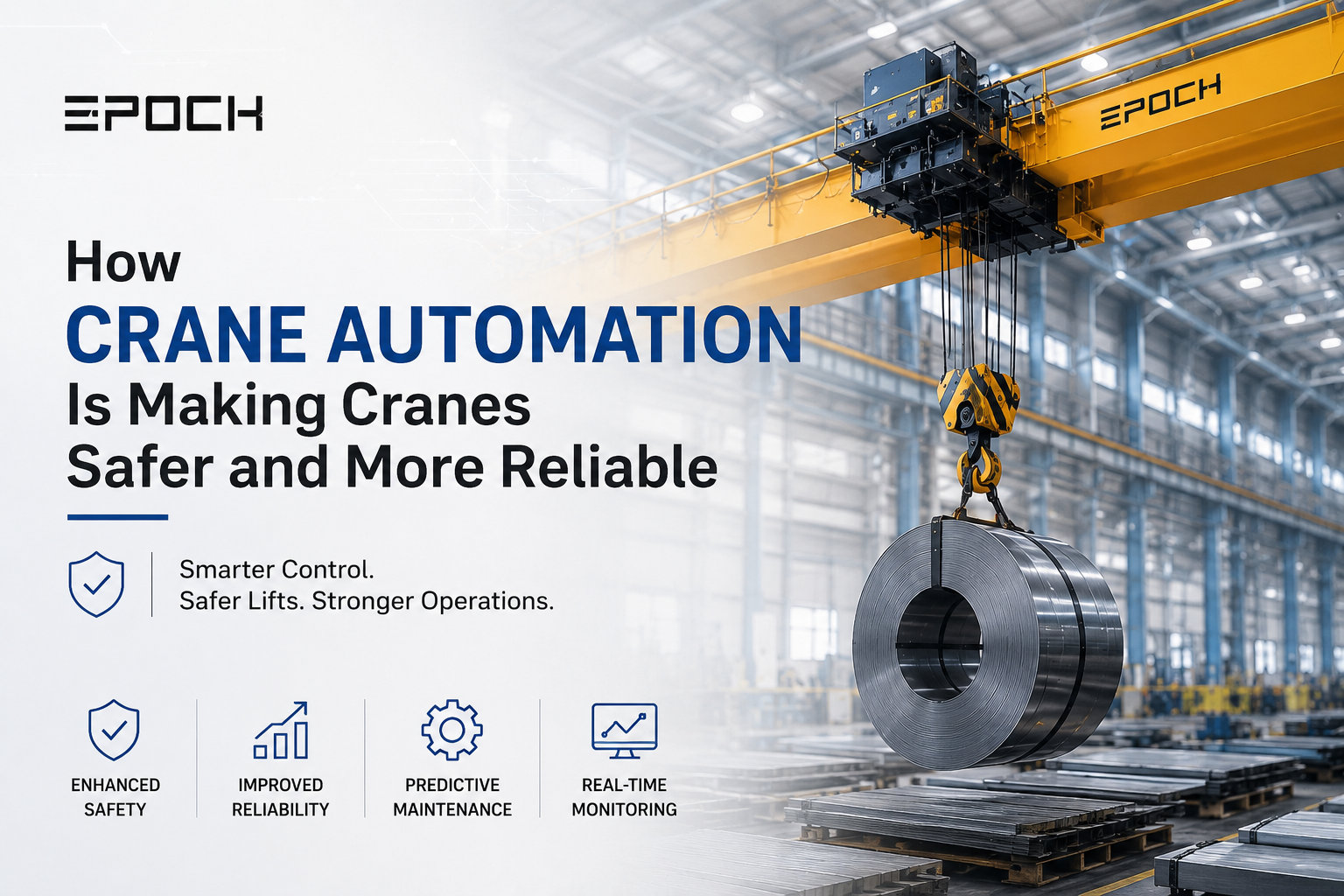
- Steel Plants: Smart crane systems improve the safe handling of heavy coils, billets, and slabs.
- Ports and Container Terminals: Automation supports faster container movement and improved productivity.
- Warehouses and Logistics Centers: Businesses benefit from streamlined material handling operations.
- Construction Projects: Advanced controls improve lifting precision and workplace safety.
No matter the industry, the goal remains the same: improve safety, reduce downtime, and increase operational efficiency.
Looking Ahead: The Future of Smart Cranes
As Industry 4.0 technologies continue to evolve, cranes are becoming smarter than ever before.
Today’s advanced systems can:
- Send performance data remotely
- Generate maintenance alerts automatically
- Support remote diagnostics
- Analyze operational trends
- Improve asset management decisions
These capabilities help organizations make informed decisions, optimize maintenance sched-ules, and maximize equipment availability.
How Epoch International Can Help
At Epoch International, we understand that reliable crane performance is essential for main-taining productivity and workplace safety.
Our crane specialists work with customers across manufacturing, construction, shipping, warehousing, and heavy industries to deliver solutions that improve crane efficiency, enhance safety, and reduce downtime.
Our expertise includes:
- Crane automation solutions
- PLC and VFD integration
- Control system modernization
- Industrial spare parts sourcing
- Crane repair and maintenance services
- Safety system upgrades
- Technical support and troubleshooting
Whether you’re planning a modernization project or looking to improve the reliability of existing equipment, our team is ready to support your goals.
Conclusion
Crane automation is no longer just an optional upgrade—it is becoming a necessity for organi-zations that prioritize safety, efficiency, and reliability.
By combining intelligent controls, real-time monitoring, and predictive maintenance capa-bilities, automated crane systems help businesses minimize risks, avoid costly downtime, and improve overall performance.
For companies looking to build safer and more productive operations, investing in crane automation is a step toward a smarter future.
Contact us for expert crane automation solutions, industrial spare parts sourcing, repair services, and technical support tailored to your operational needs.