




In precision manufacturing, a positioning error measured in microns can mean the difference between a passed inspection and a scrapped part. For CNC machine operators across the UAE's growing aerospace, automotive, medical device, and precision engineering sectors, that margin for error keeps getting smaller — and the demands on machine accuracy keep rising.
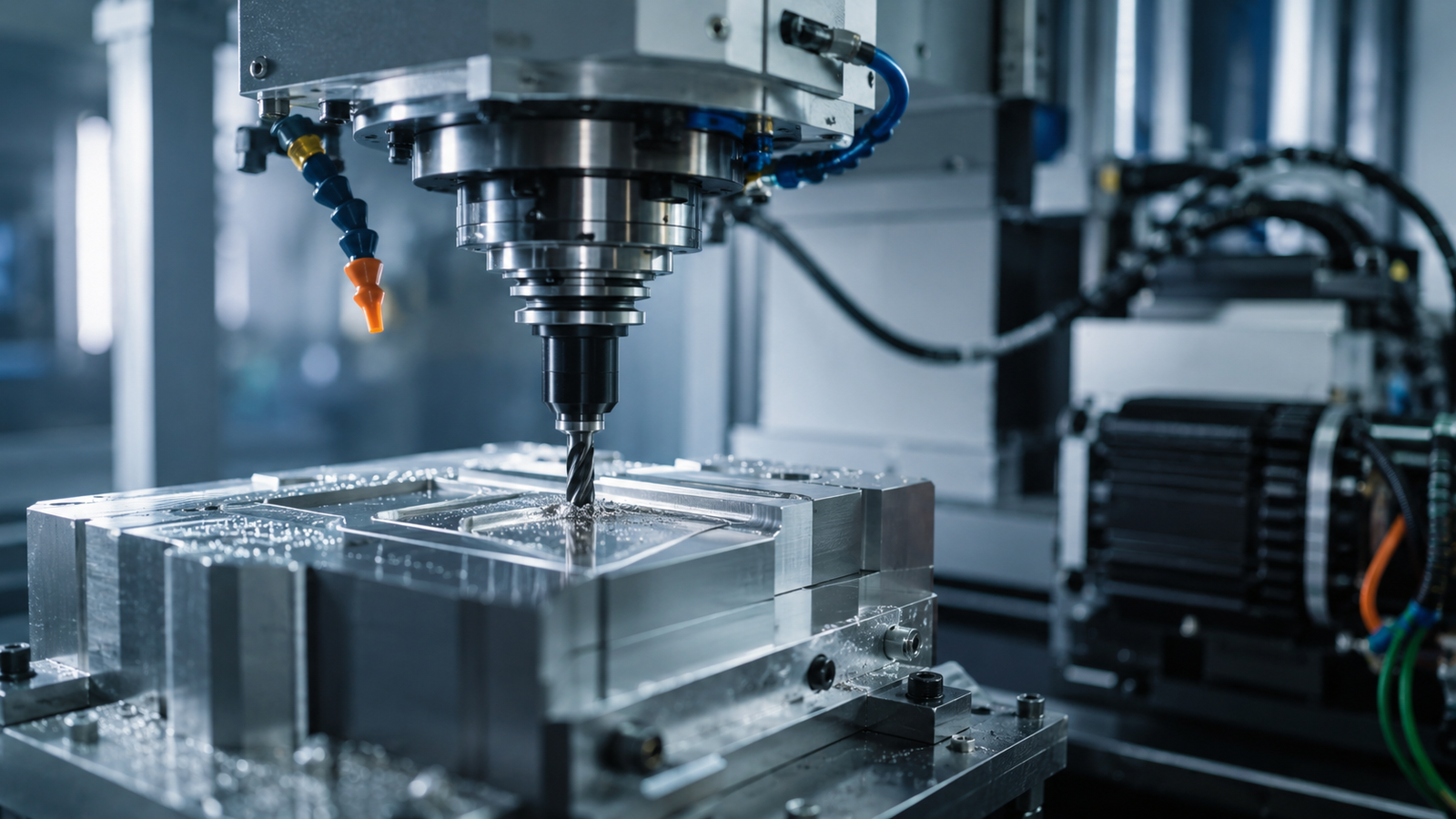
Motion control is the technology that makes tight tolerances achievable in the first place. It governs how every CNC axis moves, ensuring each toolpath is followed exactly as programmed. This article breaks down what motion control actually does inside a CNC machine, the specific mechanisms it uses to improve accuracy, and what to look for when evaluating or upgrading a motion control system.
What Is Motion Control in CNC Machines?
Motion control regulates the position, speed, acceleration, deceleration, and synchronization of every servo-driven axis in a CNC machine. A typical system includes:
- CNC controller
- Servo motors and servo drives
- Linear encoders and position feedback systems
- Spindle motor controllers
- PLC (Programmable Logic Controller)
- Human Machine Interface (HMI)
These components form a closed-loop feedback system. The controller continuously compares the commanded position against the actual machine position, and the moment a deviation appears — even a fraction of a micron — it corrects it. This loop is what separates a precision CNC machine from one that merely follows instructions.
Why CNC Machine Accuracy Matters
Poor machine accuracy shows up as incorrect dimensions, poor surface finish, tool breakage, and failed quality inspections — all of which translate directly into wasted material, unplanned downtime, and rejected parts. For manufacturers producing aircraft components, medical implants, injection molds, or automotive engine parts, tolerances are frequently held to single-digit microns. That level of precision is only realistic with a motion control system built for it.
This is particularly relevant as the UAE positions itself as a regional manufacturing hub — from Dubai Industrial City to free zones supporting aerospace and precision engineering. Facilities competing for international contracts need machine accuracy that meets global tolerance standards, and that starts with the motion control layer, not just the machine itself.
How Motion Control Improves CNC Machine Accuracy
1. Precise Positioning of Machine Axes
Servo motors receive exact position commands from the CNC controller, while encoders continuously monitor actual axis position. Any drift from the programmed location is corrected instantly. The result is higher dimensional accuracy, stronger repeatability, and fewer positioning errors across production runs.
2. Smooth Multi-Axis Coordination
4-axis and 5-axis CNC machines need multiple axes moving in sync without losing precision. Advanced motion controllers handle this interpolation directly, enabling accurate machining of aerospace turbine blades, transmission components, medical implants, injection molds, and complex titanium or aluminum parts — geometries that would be impossible to hold to tolerance manually.
3. Backlash Compensation
Ball screws, gears, and transmission systems naturally develop backlash as they wear. Modern motion control systems monitor axis feedback continuously and apply correction algorithms to compensate for this mechanical play automatically — reducing positioning error and extending the working life of the machine.
4. High-Speed Machining Without Sacrificing Accuracy
Motion control optimizes acceleration, deceleration, feed rate, velocity, and corner smoothing simultaneously. That's what allows a CNC machine to run faster without the tolerance loss that used to be the trade-off for higher throughput.
5. Real-Time Error Correction
Vibration, thermal expansion, cutting forces, and general wear all pull a machine away from its programmed path during operation. Closed-loop motion control compares commanded and actual positions in real time and adjusts motor commands on the fly, which is what keeps scrap rates down over long production runs.
6. Superior Surface Finish
Smoother, better-controlled axis movement means cleaner toolpaths with less chatter and vibration — which shows up directly as better surface finish, longer tool life, and less manual polishing downstream. This matters most in medical devices, aerospace components, and mold work, where finish quality is inspected as closely as dimension.
7. Outstanding Repeatability
For manufacturers running thousands of identical parts per day, motion control ensures every cycle follows the exact same toolpath. That consistency is what actually drives down inspection costs and rework — repeatability, not raw speed, is usually the bigger cost lever.
Key Components That Influence CNC Accuracy
- Servo motors and drives — accurate positioning and rapid response for demanding applications
- Linear encoders — high-resolution feedback that catches even microscopic positioning errors
- PLC systems — coordinate tool changing, safety interlocks, and machine sequencing
- HMIs — give operators real-time visibility into alarms, diagnostics, and machine status
- Spindle motor controllers — maintain consistent cutting conditions, minimizing vibration
Motion Control in Smart Manufacturing
Modern motion control doesn't operate in isolation anymore. It integrates with IIoT platforms, SCADA systems, MES, and predictive maintenance tools to give manufacturers real-time production insight reducing downtime and improving Overall Equipment Effectiveness (OEE). For facilities in the UAE upgrading toward Industry 4.0 standards, motion control is usually the first layer worth investing in, since every other layer of automation depends on it functioning accurately.
Sourcing and Maintaining CNC Motion Control Equipment in the UAE
Keeping a CNC machine within tolerance isn't a one-time setup it depends on sourcing the right components and catching wear before it affects accuracy. Epoch International supplies CNC controllers, PLC systems, servo motors and drives, HMIs, VFDs, encoders, and related automation components from leading global brands including Siemens, Mitsubishi Electric, ABB, and Omron — serving manufacturers across Dubai, Sharjah, Abu Dhabi, and the wider GCC.
If your CNC control panel is already showing signs of accuracy drift, our team also provides dedicated CNC machine control panel repair and PLC repair and programming services to get machines back within tolerance without a full replacement. Explore our full CNC Machines division for the complete range.
FAQ
What is the difference between open-loop and closed-loop CNC motion control? Open-loop control sends commands to the motors without verifying the actual position achieved, which leaves it vulnerable to drift from load or wear. Closed-loop control adds encoder feedback, so the system continuously checks the actual axis position against the commanded one and corrects any deviation — which is why virtually all precision CNC applications use closed-loop systems today.
How accurate can CNC motion control get? Accuracy depends on the encoder resolution, servo quality, and mechanical condition of the machine, but well-maintained modern systems routinely hold positioning accuracy within a few microns. The encoder and feedback system are usually the limiting factor, which is why upgrading feedback hardware is often the fastest way to improve an aging machine's accuracy.
What causes backlash in CNC machines, and can it be fixed without replacing parts? Backlash develops as ball screws, gears, and couplings wear from repeated use, creating small gaps that show up as positioning error, especially on direction changes. In many cases it can be reduced through software-based backlash compensation in the motion controller, though severe mechanical wear eventually needs component replacement or a control panel repair.
How often should CNC motion control components be inspected or serviced? This depends on usage intensity, but a general guideline is checking encoder feedback, servo drive performance, and backlash levels every few months in high-cycle production environments, with a full diagnostic during scheduled maintenance windows. Facilities running multiple shifts should inspect more frequently, since accumulated wear compounds faster under continuous operation.
Conclusion
Motion control is the foundation of CNC machining accuracy synchronizing axis movement, correcting positioning errors in real time, and enabling the multi-axis coordination that modern precision manufacturing depends on. As manufacturers across the UAE invest in Industry 4.0 and smart factory upgrades, motion control is usually where that investment should start.
Looking to upgrade or repair your CNC automation components? Get a quote from Epoch International on WhatsApp - our team sources and repairs PLCs, servo systems, HMIs, VFDs, and encoders for CNC machines across Dubai and the UAE.