



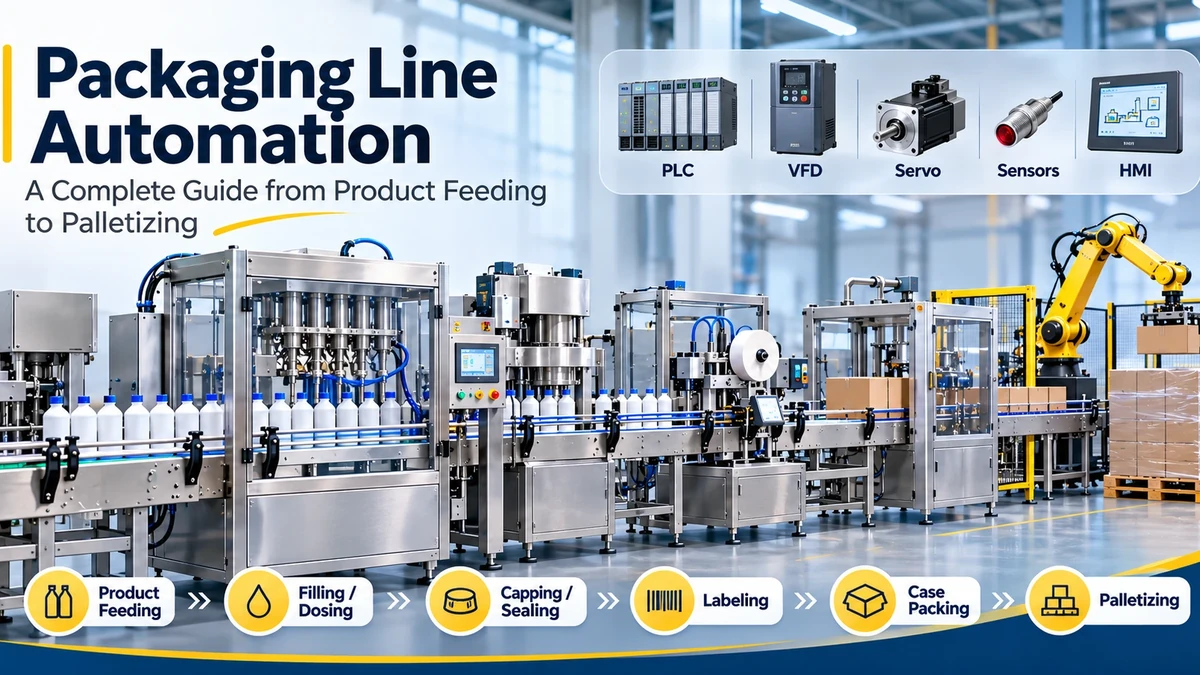
Walk along any packaging line and you'll see a filler, a capper, a labeler, an inspection station, a case packer and, at the far end, a palletizer. What you won't see is the thing holding them together: the PLCs, drives, sensors and HMIs that tell each machine when to run, how fast, and when to stop. When one of those parts fails, the line usually stops with it.
This guide follows a product from the moment it enters the line until it leaves on a wrapped pallet. At each stage we look at the automation doing the work, then finish with the faults that cause most downtime and the spares worth keeping close.
Product Feeding and Orientation
A line can only run as well as its infeed. Products have to arrive spaced, upright and facing the right way, because a filler or capper has no way to correct a bottle that turns up on its side.
How that happens depends on the product. Caps and small parts usually come from a vibratory bowl feeder. Empty bottles dumped into a hopper go through an unscrambler that stands them upright. A timing screw then spaces them to the pitch of the next machine, and for fragile or odd-shaped products a vision-guided robot may do the picking instead.
Photoelectric and proximity sensors check that each item is present and in position. If something arrives wrong, the PLC can pause the infeed or push the item off before it reaches the filler. A single inverted cap can stop a capper just as effectively as a broken part, so this is where many jams are prevented.
Conveyors and Line Balancing
Conveyors carry product between every machine. Bottles and jars usually ride on belt or tabletop chain conveyors, cartons on rollers, and pallets on heavy chain conveyors. Food and beverage plants often use modular plastic belting because it stands up to daily washdown.
Most conveyor motors run from a VFD, so the PLC can change their speed as conditions change. That matters because a line is only as fast as its slowest machine, which is usually the filler. Good line design keeps the filler running steadily by setting the conveyors and machines around it slightly faster, so it is never waiting for containers and never blocked by a full outfeed.
Accumulation sensors between machines make this work in practice. Suppose the labeler stops for a roll change. Product starts to back up, the sensors see the queue growing, and the PLC slows the upstream conveyors before the backlog reaches the filler. When the labeler restarts, the drives ramp back up gradually rather than jumping straight to full speed, which is kinder to both the product and the mechanics.
Filling, Dosing and Weighing
Every gram of overfill is product you give away, and every underfilled pack is a compliance risk. That is why filling is usually the most tightly controlled stage on the line.
The method depends on what is going into the container. Thick products like sauces and creams are often dosed by piston fillers. Products sold by weight use gravimetric fillers with load cells under each head. Liquids may be metered with magnetic or mass flowmeters, while beverages and other thin liquids are commonly filled to a level or on a timed pressure cycle.
In each case the PLC reads the feedback (weight, flow or level) and opens or closes valves and pumps to hit the target. Where the filler uses servo-driven pistons or pumps, an operator can change the fill volume from the HMI during a changeover instead of adjusting the mechanics by hand. This kind of control is especially important in food and beverage and pharmaceutical production.
Sealing, Capping and Labeling
Once a container is full it has to be closed and identified, and each of those jobs has its own technology.
Pouches, sachets and flow-wrapped products are generally heat sealed. Bottles with a foil liner under the cap go through an induction sealer, which bonds the liner to the rim for tamper evidence and leak protection. Ultrasonic sealing is used where heat would damage the product or the material.
Cappers place and tighten closures. On a servo-driven capper the torque is controlled precisely, so the cap seals properly without being so tight that the customer struggles to open it.
Labelers apply the product label along with barcodes and batch or expiry codes. A gap sensor finds the edge of each label on the roll, and an encoder on the conveyor tells the servo applicator exactly where the container is. Because the applicator follows the encoder, labels land in the same place whether the line is running fast or slow.
Inspection and Quality Control
At full production speed, nobody can check every pack by eye. Automated inspection fills that gap.
A typical line combines several checks. Photoelectric sensors confirm a product or cap is present. Machine vision systems look at label position, print quality and fill level. Code readers verify barcodes and 2D codes, which also supports track-and-trace. Checkweighers catch packs that are too light or too heavy, and metal detectors or X-ray systems look for foreign contamination.
When any of these finds a fault, it signals the PLC, which fires a reject device such as an air blast, pusher or diverter. Well-designed lines also include a reject confirmation sensor to prove the bad pack actually left the line. If rejects keep coming, the PLC can raise an alarm on the HMI or stop the machine, so someone fixes the cause instead of throwing away good product.
Case Packing and Carton Handling
After primary packaging, products are grouped into cases. A case packer erects a case from a flat blank, counts and arranges the products into the right pattern, loads them from the top, the side or with a pick-and-place robot, and then closes the case with tape or hot-melt glue.
Simple transfers are usually done with pneumatic cylinders. Grouping products at speed needs the accuracy of servo axes. A case coder or labeler then adds the shipping information before the case moves on to palletizing.
Robotic Palletizing and Robot Cell Safety
Palletizing is the last big job on most lines. Closed cases arrive at the palletizing cell, and either a robot or a conventional layer palletizer stacks them in a set pattern. Interlocking the layers, the way bricks are laid, keeps the load stable on the truck.
The robot confirms each case's position with sensors or vision, picks it with a vacuum, clamp or fork gripper, and places it on the pallet. When the pallet is full, a stretch wrapper secures the load for storage and shipping.
A palletizing robot moves heavy loads quickly, so the cell has to keep people out of harm's way. That normally means fencing with interlocked gates, light curtains or laser area scanners where pallets go in and out, and emergency stop circuits monitored by a safety PLC or safety relay. Muting logic lets a pallet pass through a light curtain without stopping the cell, while still tripping if a person walks through.
Robot cell design generally follows the ISO 10218 series, which covers the robot itself and its integration into a system. ISO 13849-1 is used alongside it to rate how reliable the safety-related control circuits need to be.
Packaging in Hazardous Areas
Some packaging lines handle solvents, flammable liquids, aerosols or combustible powders. Depending on the product and the process, part of the line may fall inside a classified hazardous zone, where a spark or hot surface from ordinary electrical equipment could ignite the atmosphere.
In those areas, standard components are replaced with ones built for the zone. Sensors and instruments are connected through intrinsically safe (Ex i) barriers or isolators. Motors and junction boxes go into flameproof (Ex d) or increased safety (Ex e) enclosures. Where a standard panel or HMI has to sit in the zone, a purge and pressurization system can make that possible. Sensors and solenoid valves themselves need Ex certification for the gas or dust group present.
All of this has to match the site's area classification, so it is worth getting right at the design stage. Epoch International supplies hazardous area solutions, including interface products from brands such as Pepperl+Fuchs.
How PLCs, Sensors, Drives and HMIs Work Together
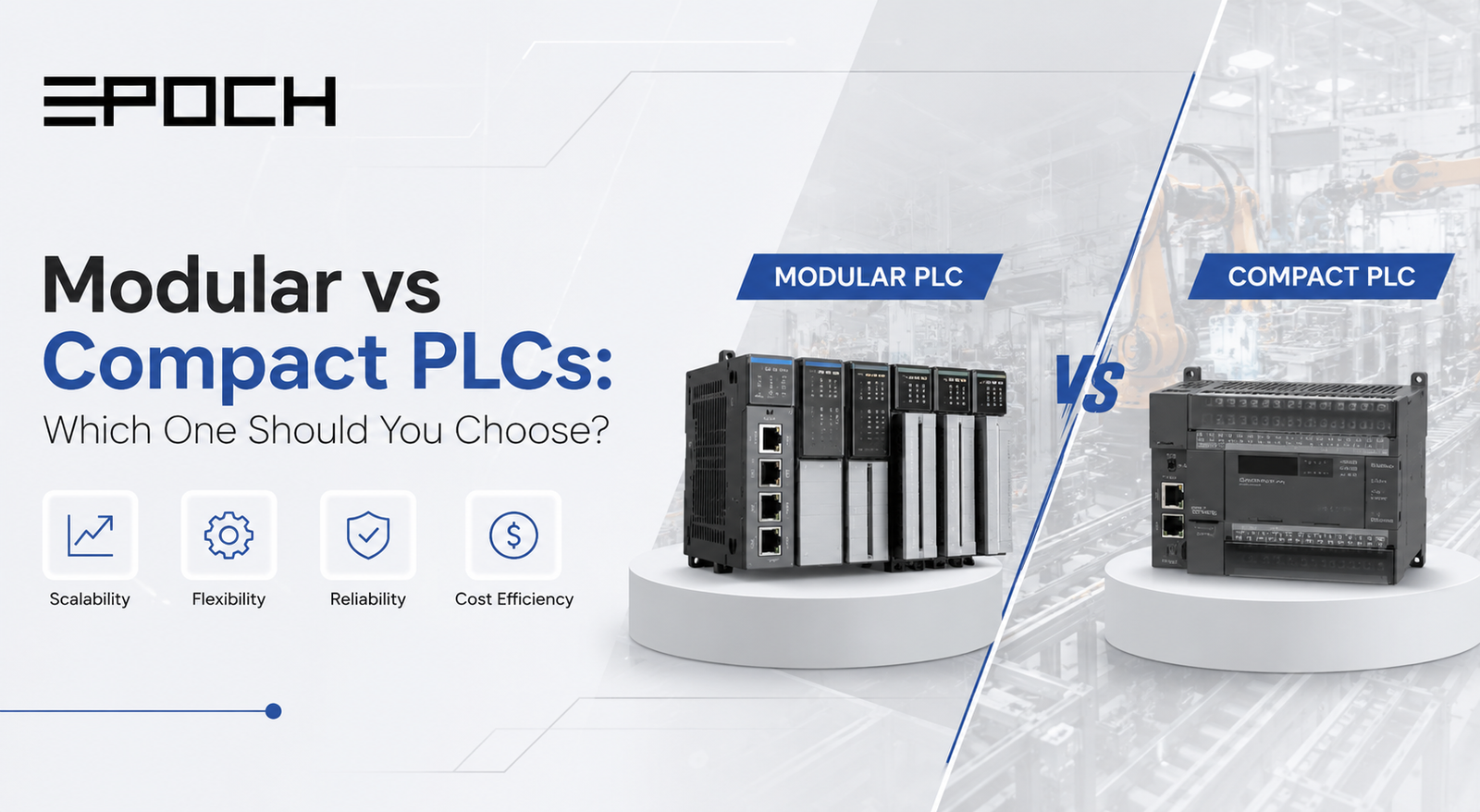
Each machine on the line usually has its own PLC, and a line controller coordinates them. The PLC reads its inputs, runs the program and switches its outputs, many times a second. Whether a modular or a compact PLC fits best depends mostly on how much I/O the machine needs and how likely it is to grow.
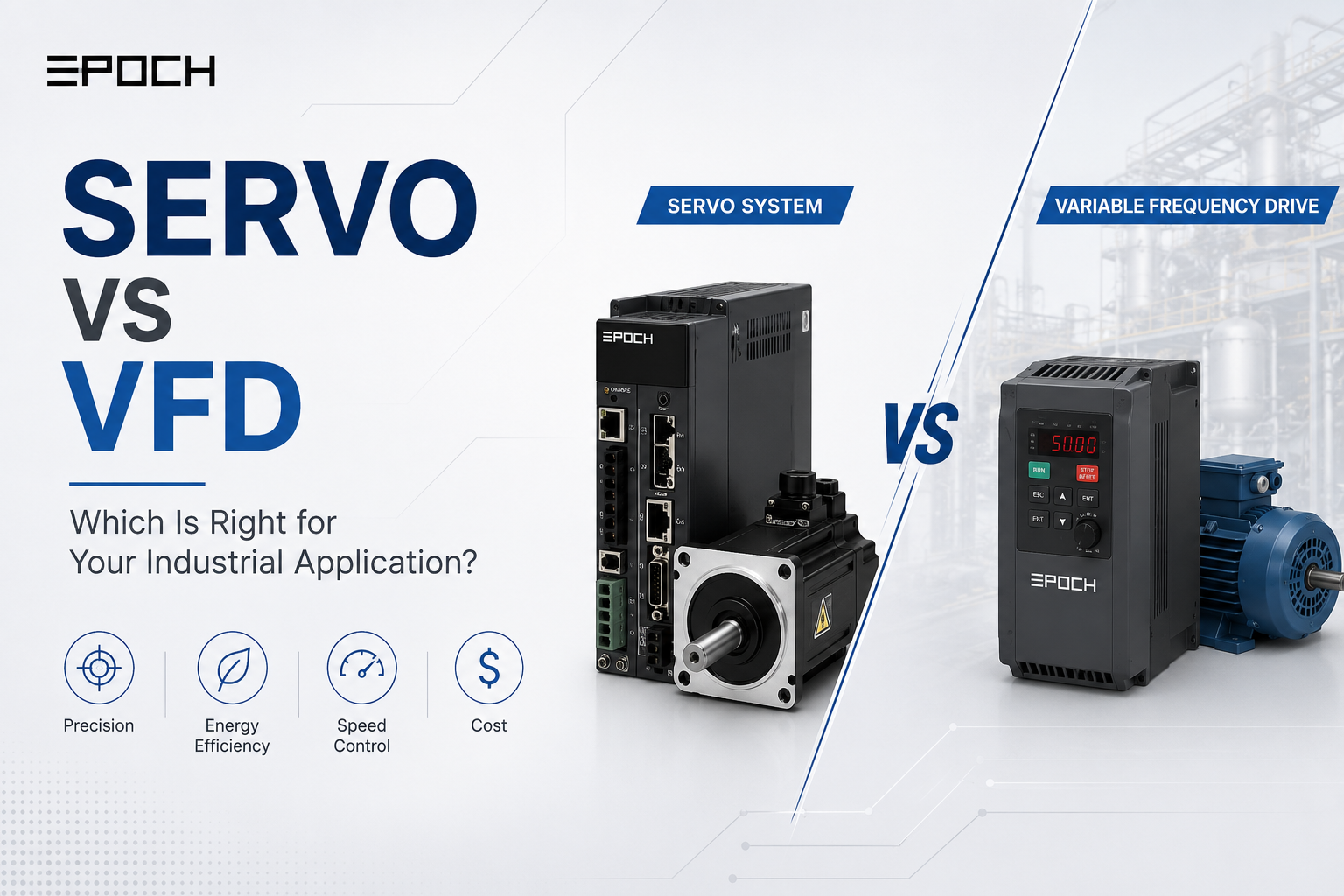
Sensors are the PLC's eyes, reporting position, presence, level, weight and machine status. VFDs control the speed of conveyors and pumps. Servo drives take over wherever position matters, on labelers, cappers, fillers and case packers; our guide on servo vs VFD explains where the line between them falls. The HMI is where operators start and stop the machine, load recipes, read alarms and watch production counts.
All of these talk over an industrial network, typically PROFINET, EtherNet/IP, EtherCAT or Modbus TCP. Many machine builders also organise their software around PackML, a standard set of machine states and data tags developed by OMAC. Because every PackML machine reports its status the same way, a filler and a capper from different builders can be coordinated more easily. The OPC UA PackML specification (OPC 30050) carries the same model up to supervisory and OEE systems.
Common Failures on Packaging Lines
Packaging lines are hard on electronics. They run long shifts, stop and start constantly, and in food plants they get washed down every day. The table below lists the faults that most often take a line down and what usually causes them.
| Component | Typical failures | Common causes |
|---|---|---|
| VFDs | Overcurrent or overvoltage trips, DC bus capacitor failure, cooling fan failure | Frequent start/stop cycles, fast deceleration without braking resistors, heat and dust in panels |
| Servo drives and motors | Encoder faults, following-error alarms, feedback cable failure | Cable flexing on moving axes, vibration, moisture ingress |
| PLCs | I/O module failure, communication loss, memory or battery issues | Voltage spikes, poor earthing, panel overheating |
| HMIs | Touchscreen failure, backlight failure, freezing | Washdown exposure, heat, constant use |
| Sensors | False triggering, missed detections | Misalignment, dirty lenses, mechanical damage |
| Pneumatics | Leaking cylinders, sticking solenoid valves | Wear, contaminated or wet compressed air |
A failed drive or PLC doesn't always mean buying new. Many of these faults can be repaired at component level, which is often quicker when the original model is hard to find. Epoch International offers VFD repair, PLC repair and programming and PCB repair, and Epoch Technical handles servo drive repair and on-site support.
Critical Spare Parts to Keep in Stock
One failed drive can stop a whole line, and waiting days for a replacement usually costs far more than keeping one on the shelf. If you are building a spares list, start here:
- A spare VFD for each conveyor drive size on the line
- One servo drive and motor for your most critical axis, often on the labeler or filler
- PLC I/O modules, plus a spare CPU if your model has a long lead time
- A replacement HMI with a copy of the current project already loaded
- One of each type of photoelectric and proximity sensor you use
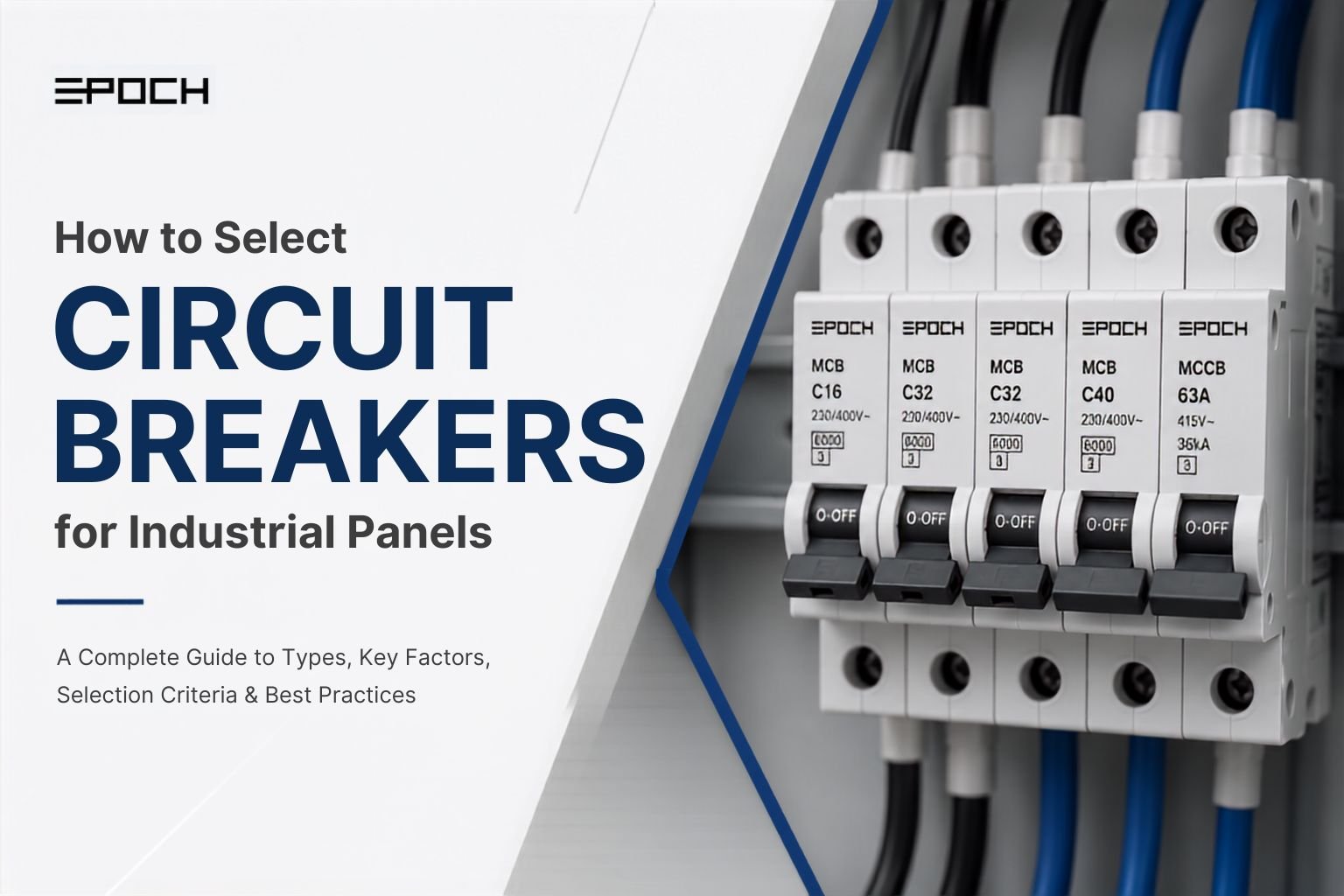
- Solenoid valves, contactors, relays and circuit breakers for the control panels
- Encoder and servo feedback cables, which wear out sooner than most people expect
Just as important are up-to-date backups of every PLC program, HMI project and drive parameter set. A spare part in the store room is far less useful if nobody can load the right program into it.
Frequently Asked Questions
What is packaging line automation? It means using PLCs, HMIs, VFDs, servo drives, sensors and robots to run packaging steps such as feeding, filling, capping, labeling, inspection, case packing and palletizing, with operators supervising rather than handling each product.
Which PLCs are used in packaging machines? Siemens, Mitsubishi Electric, Omron, Schneider Electric and ABB are all common. The right choice depends on how much I/O and motion control the machine needs, and which network the rest of the line uses.
Should a packaging conveyor use a VFD or a servo drive? For most conveyors, a VFD is enough because only speed matters. Choose a servo where the conveyor must index or stay synchronized with another axis, as on labelers, fillers and case packers.
What causes most packaging line downtime? Jams, misaligned sensors, drive and encoder faults, worn pneumatics and slow changeovers account for much of it. Preventive maintenance and a sensible spares stock reduce most of these stoppages.
Can a failed VFD or servo drive be repaired? Often, yes. Failed capacitors, fans, power modules and control boards can usually be replaced at component level, which is especially useful for older or discontinued drives.
Keep Your Packaging Line Running
The machines on a packaging line get the attention, but it is the PLCs, drives, HMIs and sensors behind them that decide whether the line keeps running. When one fails, what matters is how quickly you can replace or repair it.
Epoch International supplies industrial automation products, electrical components and spare parts from manufacturers including ABB, Siemens, Schneider Electric, Mitsubishi Electric, Omron and Yaskawa. We also repair PLCs, VFDs, servo drives and control boards.
If you need a replacement drive, a spares package for a new line, or a repair on a faulty unit, contact our team for a quote. For repairs, you can also request a technical repair quote from Epoch Technical.