



Quick answer: Choose the S7-1200 G2 for compact machines with moderate I/O and up to around 10 positioning axes. Choose the S7-1500 when the system is larger or more complex: more processing power, extensive modular I/O, advanced motion, redundancy or deeper diagnostics. Both are programmed in TIA Portal, so the decision is mostly about the size and demands of the application.
A controller that runs a small packaging machine perfectly can struggle on a production line with dozens of drives and hundreds of signals. Choose too big and you pay for capacity you never use. That is the trade-off behind most Siemens PLC comparison questions, and it usually comes down to two families: the S7-1200 and the S7-1500.
The decision has shifted since Siemens launched the S7-1200 G2. The compact family is now considerably faster and handles coordinated motion, so a machine that once needed an S7-1500 may no longer need one. This guide walks through the differences that matter in practice. For the wider Siemens portfolio, see our overview of Siemens PLCs, HMIs and drives.
The Two Families at a Glance
Siemens S7-1200 G2: the compact controller
The S7-1200 is built for machines where space, cost and simple engineering matter. Power supply, I/O and communication sit in one compact unit, and you add signal or communication modules beside it when you need more. The current S7-1200 G2 comes as the CPU 1212C and CPU 1214C, plus fail-safe 1212FC and 1214FC versions.
According to Siemens' S7-1200 G2 technical data, the G2 CPUs execute a bit instruction in 37 ns, against 85 ns on the previous generation. Siemens puts the overall performance gain at more than 100%. Both CPUs have two PROFINET ports with IRT support, and they are narrower than before: 70 mm for the CPU 1212 and 80 mm for the CPU 1214, compared with 90 mm and 110 mm for the equivalent older CPUs. NFC lets a technician read diagnostics from a phone.
Typical applications include packaging and filling machines, conveyors and material handling, pumping and water treatment, and general machine and building automation. For many machine builders it offers the best balance between capability and system cost.

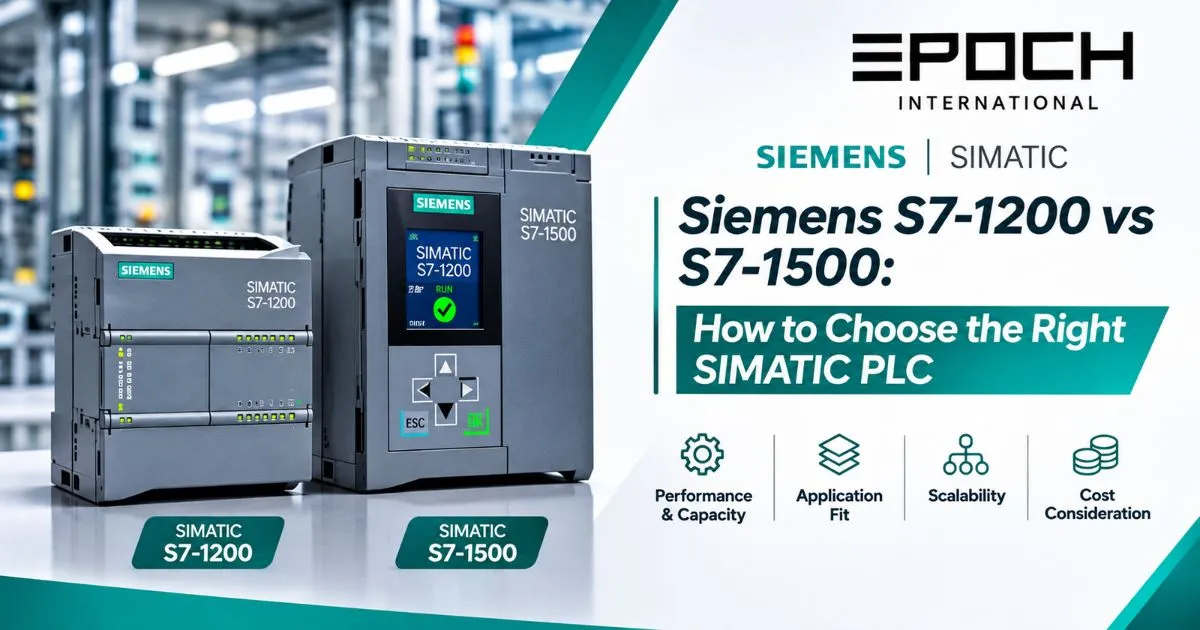
Figure 1: Siemens SIMATIC S7-1200 G2 compact controller.
Siemens S7-1500: the modular controller
The S7-1500 is built as a modular system. You pick a CPU from several performance classes, then add digital, analog, technology and communication modules to suit the project. Siemens states that every S7-1500 CPU supports motion control, and the technology (T) CPUs add functions such as extended gear synchronization. The family also includes fail-safe (F) CPUs, redundant R/H systems, compact CPUs, ET 200SP-based CPUs and a software controller for PC-based systems.
You'll usually find the S7-1500 on large production lines, process plants, high-speed machinery with many axes and distributed systems with remote I/O spread across a site.
Figure 2: Siemens SIMATIC S7-1500 modular controller.
Siemens S7-1200 vs S7-1500: Main Differences
The table below summarizes how the two families compare. Exact capabilities depend on the CPU model, firmware and modules you select, so treat it as a starting point and check the datasheet for your shortlisted CPU.
Table 1: Siemens S7-1200 G2 vs S7-1500
| Feature | S7-1200 G2 | S7-1500 |
|---|---|---|
| Typical application | Compact machines | Larger and complex systems |
| Architecture | Compact CPU with expansion modules | Modular, CPU plus modules on a rail |
| CPU choice | CPU 1212C, 1214C (and F versions) | Several performance classes; standard, F, T, R/H, compact, ET 200SP and software CPUs |
| Processing speed | 37 ns per bit instruction (Siemens) | Higher performance classes for demanding applications |
| Motion control | Coordinated axes and kinematics; typically 4, up to 10 positioning axes (Siemens) | Motion on every CPU; technology CPUs for advanced motion such as gearing |
| Safety | Fail-safe CPU 1212FC and 1214FC | Fail-safe (F) CPUs across the range |
| Redundancy | No redundant CPU versions | Redundant R/H systems available |
| Communication | 2 PROFINET ports (IRT), Modbus TCP, OPC UA server and client (runtime licence) | PROFINET, OPC UA and additional communication modules |
| Diagnostics | Web server, NFC access | Advanced diagnostics |
| Engineering | TIA Portal V20 or later (STEP 7) | TIA Portal (STEP 7) |
Performance and CPU Selection
Speed is the first thing most engineers compare, but choosing on speed alone often means paying for headroom you never use. The G2 has closed much of the gap for machine-level control, so the S7-1500 now earns its place mainly through scale: more I/O, more axes, more communication and functions such as redundancy.
Whichever family you lean towards, work through these questions before shortlisting a CPU:
- How much program and data memory will the application need?
- How quickly does the PLC have to respond to process signals?
- How many devices will communicate with the CPU?
- Does the machine need positioning or coordinated motion?
- Are safety functions or redundancy required?
- What is likely to be added over the next few years?
A good rule is to pick the smallest CPU that comfortably meets today's requirements and still leaves room to grow. Upgrading a CPU later is usually cheaper than replacing the whole platform.
I/O Expansion and System Flexibility
I/O count often decides the matter. A compact machine with a handful of sensors, push buttons and motor outputs rarely needs a modular controller. A production line with analog instruments, temperature sensors, valve islands and remote I/O stations almost certainly does.
The S7-1200 G2 combines integrated I/O with expansion modules, which works well when the signal count is predictable. The S7-1500 lets you build exactly the mix of digital, analog, technology and communication modules you need, and extend it with distributed I/O over PROFINET.
Before you finalize the hardware, list your digital and analog signals, RTD and thermocouple inputs, high-speed counters, remote I/O stations, communication modules and spare capacity.
If you're still deciding between a compact and a modular controller in general, our guide to modular vs compact PLCs covers that choice in more depth. You can also browse our PLC range and I/O modules while planning the configuration.
Communication, Motion Control and Safety
Both families speak PROFINET, so they connect to HMIs, drives, remote I/O and sensors in the same way. The S7-1200 G2 adds two PROFINET ports with IRT, Modbus TCP and an OPC UA server and client, which Siemens notes requires a runtime licence. The S7-1500 offers broader options through its CPU interfaces and plug-in communication modules.
If you're choosing a network as well as a PLC, our comparison of PROFINET, EtherNet/IP, EtherCAT and Modbus TCP explains how the main industrial Ethernet protocols differ.
Motion is where the G2 changed most. The original S7-1200 handled single axes only. Siemens describes the G2 as supporting coordinated axes and kinematics, with a typical 4 and maximum 10 positioning axes. For gearing, camming and larger multi-axis machines, the S7-1500 technology CPUs remain the stronger choice.
Both families have fail-safe versions that handle safety logic and PROFIsafe communication in the same controller. The G2 fail-safe CPUs are the 1212FC and 1214FC, and Siemens plans more fail-safe I/O modules for 2026 and 2027. Select the CPU and safety I/O together, based on the safety requirements of the machine.
TIA Portal Engineering and Compatibility
Both families are programmed with STEP 7 in TIA Portal, so the same engineering environment covers PLC logic, hardware configuration, diagnostics and HMI screens. Both support the IEC 61131-3 languages, including Ladder Diagram, Function Block Diagram and Structured Text.
If HMIs are part of the project, our article on how PLCs and HMIs divide the work is a useful companion, and you can browse our HMI panels as well.
Before you buy, check the TIA Portal version, CPU firmware, engineering licences and hardware compatibility. This matters most with the G2: Siemens states it needs TIA Portal V20 or later.
Moving from the Original S7-1200 to the G2
Many plants still run the original S7-1200, and that changes the conversation from "which PLC?" to "what do we do with the ones we have?" Siemens' migration overview scheduled the phase-out announcement for the original S7-1200 for 1 November 2026.
The G2 is not a drop-in replacement. The CPUs have different dimensions and push-in terminals, and Siemens maps the older modules to successor parts in its S7-1200 G2 migration overview. Most module types are already available for the G2, but some, such as IO-Link, PROFIBUS, CAN and weighing modules, are still in development. Programs can be migrated with Siemens' migration tool, which needs TIA Portal V20, although some manual steps may remain.
In practice, plants usually do one of two things: keep a stock of original S7-1200 spares for existing machines, or plan a staged migration to the G2 during a scheduled shutdown. Either way, it pays to check part availability early.
Which PLC Is Right for Your Application?
The S7-1200 G2 is the sensible choice when you're building a compact machine with moderate processing and I/O needs, when its integrated motion is enough, when panel space is tight, and when you want a cost-effective controller.
The S7-1500 is worth the extra cost when the process involves complex sequences, when you need more processing performance or extensive I/O, when motion goes beyond what the G2 offers, or when diagnostics and redundancy are important.
For procurement teams, look beyond the CPU price. The real cost includes power supplies, I/O and communication modules, accessories, software licences and future expansion. A slightly more expensive CPU can be the better buy if it saves integration time or makes later changes easier.
Sourcing Siemens SIMATIC PLCs
Once you've chosen a family, the next step is the exact hardware. This matters most when replacing an existing controller, because two CPUs from the same family can differ in memory, interfaces, firmware and hardware compatibility.
Before placing an order, confirm the exact Siemens part number, the CPU model and hardware version, compatibility with your existing I/O modules, the firmware and TIA Portal version, product condition and warranty, and lead time.
To check part numbers and specifications before requesting a quote, you can browse the SIMATIC S7-1500 range on AutomationItems.
Epoch International supplies Siemens automation products for industrial projects. For more detail on specific ranges, see our pages on Siemens PLC systems and modules, Siemens I/O modules and SIMATIC HMI panels.
Conclusion
The S7-1200 G2 has become a capable controller for compact machines, with much faster processing, coordinated motion and OPC UA. The S7-1500 remains the platform for larger systems that need more performance, more I/O, advanced motion or redundancy.
Start from the application rather than the most powerful CPU. Work through your I/O, communication, motion and expansion needs, and the right family is usually clear.
Looking for Siemens SIMATIC PLCs or Replacement CPUs?
Send us your S7 part numbers for availability and lead time. Our team can help you source S7-1200, S7-1200 G2 and S7-1500 CPUs, I/O modules and compatible automation components.
Frequently Asked Questions
What is the difference between the S7-1200 and the S7-1500?
The S7-1200 is Siemens' compact controller for machines with moderate I/O and processing needs. The S7-1500 is a modular controller for larger or more complex systems, with more CPU performance classes, wider I/O expansion, technology CPUs for advanced motion, and redundant versions. Both are programmed in TIA Portal.
Is the S7-1200 G2 compatible with the original S7-1200?
Not directly. The G2 CPUs have different dimensions and push-in terminals, and Siemens maps the older modules to successor parts. Programs can be moved across with Siemens' migration tool in TIA Portal V20 or later, though some manual steps may still be needed.
Which TIA Portal version do I need for the S7-1200 G2?
TIA Portal V20 or later, according to Siemens' S7-1200 G2 migration overview.
Does the S7-1200 support OPC UA?
Yes. The S7-1200 G2 has an OPC UA server and client. Siemens notes that using them requires a runtime licence.
How fast is the S7-1200 G2 compared with the original S7-1200?
Siemens lists a bit instruction time of 37 ns for the G2 CPU 1212C and 1214C, against 85 ns for the previous generation, and describes the overall performance increase as more than 100%.
How many motion axes can the S7-1200 G2 control?
Siemens gives a typical figure of 4 positioning axes and a maximum of 10, measured at a 4 ms servo cycle and 35% CPU load. G2 also adds coordinated axes and kinematics, where the original S7-1200 handled single axes only.
Is there a fail-safe version of the S7-1200 G2?
Yes. Siemens lists the CPU 1212FC and CPU 1214FC as fail-safe G2 CPUs, with more fail-safe I/O planned for 2026 and 2027.
Can an S7-1200 program be migrated to an S7-1500?
Yes, both run in TIA Portal and use the same programming languages, so most logic carries over. Hardware configuration, I/O addressing and some instructions will need reviewing, so plan time for testing.
Is the original S7-1200 being discontinued?
Siemens' S7-1200 G2 migration overview scheduled the phase-out announcement for the original S7-1200 for 1 November 2026. Check current availability with your supplier before planning long-term spares.
Sources
- Siemens: SIMATIC S7-1200 G2
- Siemens: SIMATIC S7-1500
- Siemens: SIMATIC S7-1200 G2 technical data and applications (PDF)
- Siemens: SIMATIC S7-1200 G2 migration overview (PDF)
- IEC 61131-3: Programmable controllers, programming languages