




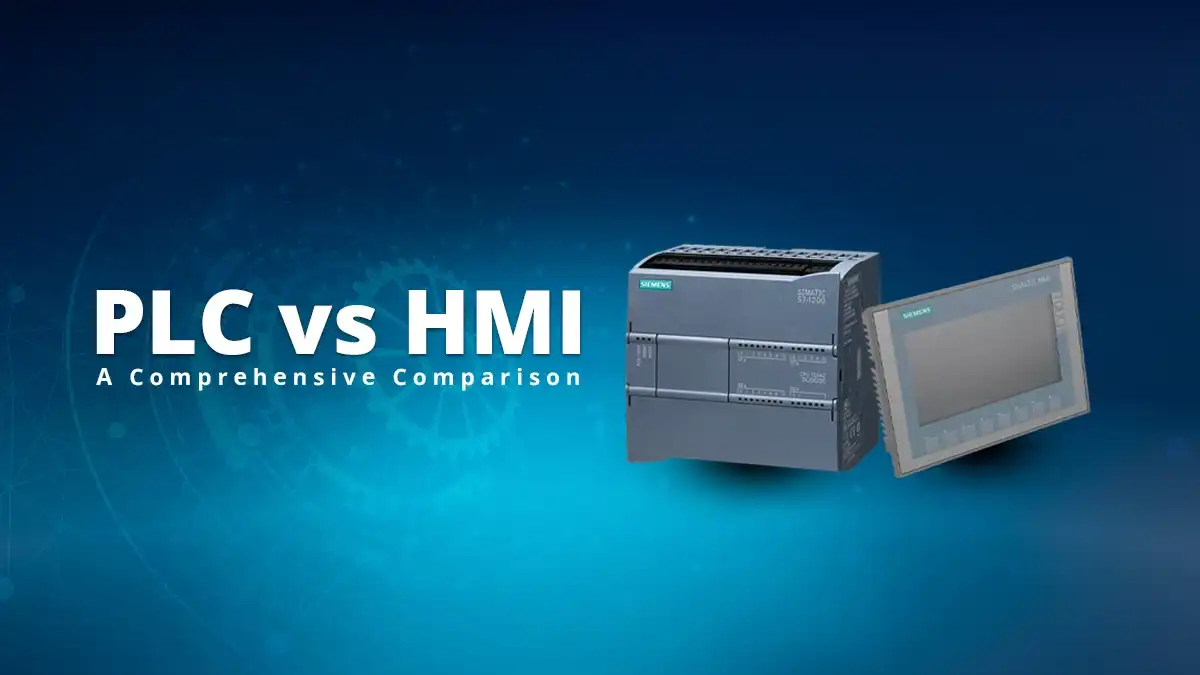
In industrial automation, PLCs and HMIs are often mentioned together, yet they serve very different purposes. Whether working with Siemens, Allen-Bradley, ABB, Schneider Electric, Mitsubishi, or Omron systems, the fundamental principle remains the same: PLCs control the process, while HMIs communicate it to people.
Understanding this distinction is essential for designing reliable, maintainable, and efficient automation systems across manufacturing, oil and gas, utilities, and process industries.
What Does a PLC Really Do?
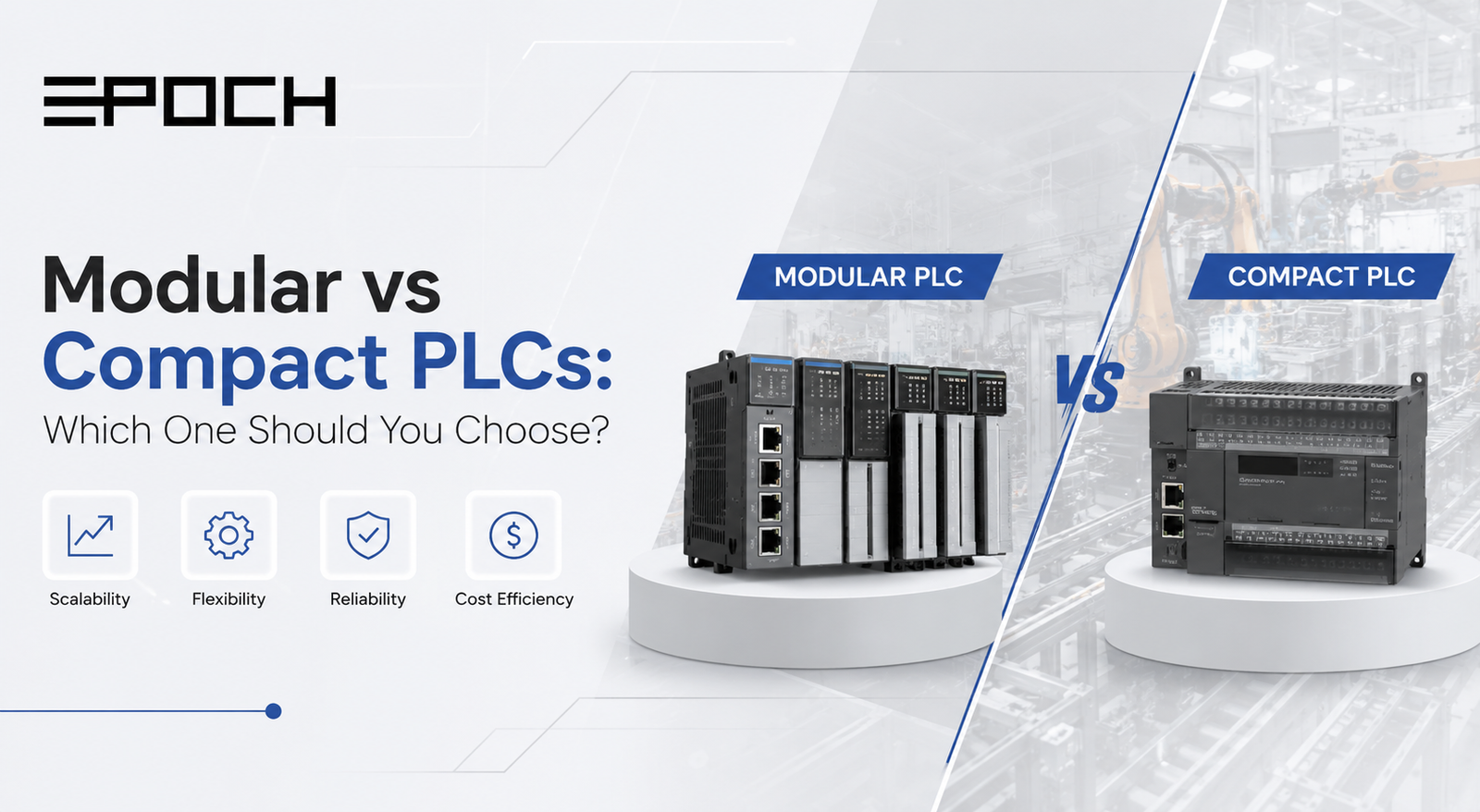
A Programmable Logic Controller (PLC) is the decision-making core of an automation system. PLCs continuously scan inputs, execute control logic, and update outputs. They handle motor control, interlocks, sequencing, safety logic, and PID loops while operating reliably in harsh industrial environments such as high temperatures, vibration, dust, and electrical noise. If a process must run automatically, safely, and consistently, the PLC is responsible.
Common PLC platforms include Siemens S7-1200 and S7-1500, Allen-Bradley CompactLogix and ControlLogix, ABB AC500 series, Schneider Electric Modicon M340 and M580, Mitsubishi FX and Q series, and Omron CJ and NX series.
What Is an HMI and What It Is Not
A Human-Machine Interface (HMI) is the visual and interactive layer of the automation system. HMI does not replace the PLC — instead, it depends on it. HMIs allow operators to monitor process values, view alarms, adjust setpoints, and interact with the system. However, HMIs do not execute safety logic or make independent control decisions.
Popular HMI platforms include Siemens Comfort and Unified Panels, Allen-Bradley PanelView Plus, Schneider Electric Magelis, Mitsubishi GOT series, and Omron NB and NA series.
PLC vs. HMI: Core Differences
- Primary Role: PLC handles real-time control and logic execution; HMI handles visualization and operator interaction
- Decision Making: PLC is deterministic and autonomous; HMI is dependent on the PLC
- Programming: PLC uses Ladder Logic, FBD, Structured Text; HMI uses graphics, alarms, and trends
- Failure Impact: PLC failure stops or makes the process unsafe; HMI failure causes loss of operator visibility or control
Why PLCs and HMIs Work Best Together
In a real industrial setup, PLCs and HMIs are not competitors — they are partners. The PLC does the thinking. The HMI does the talking. A well-designed system keeps all control logic inside the PLC, uses the HMI only for visualization and operator commands, and ensures the process remains safe even if the HMI fails. This approach improves reliability and makes maintenance far easier.
Real World Applications
- A Siemens S7-1500 PLC controls pumps and valves while a Comfort Panel HMI displays flow rates and alarms
- An Allen-Bradley ControlLogix PLC runs a packaging line with PanelView HMIs for operators
- An ABB AC500 PLC executes process logic while ABB CP600 HMIs provide plant-wide visibility
Conclusion
PLCs and HMIs serve different but equally important roles in industrial automation. The PLC acts as the reliable control engine, while the HMI provides clarity and interaction for human operators. When designed correctly, they improve system performance, simplify troubleshooting, and reduce downtime. Epoch International supports a wide range of PLC and HMI platforms from leading global brands, offering supply, service, repair, and technical expertise.