




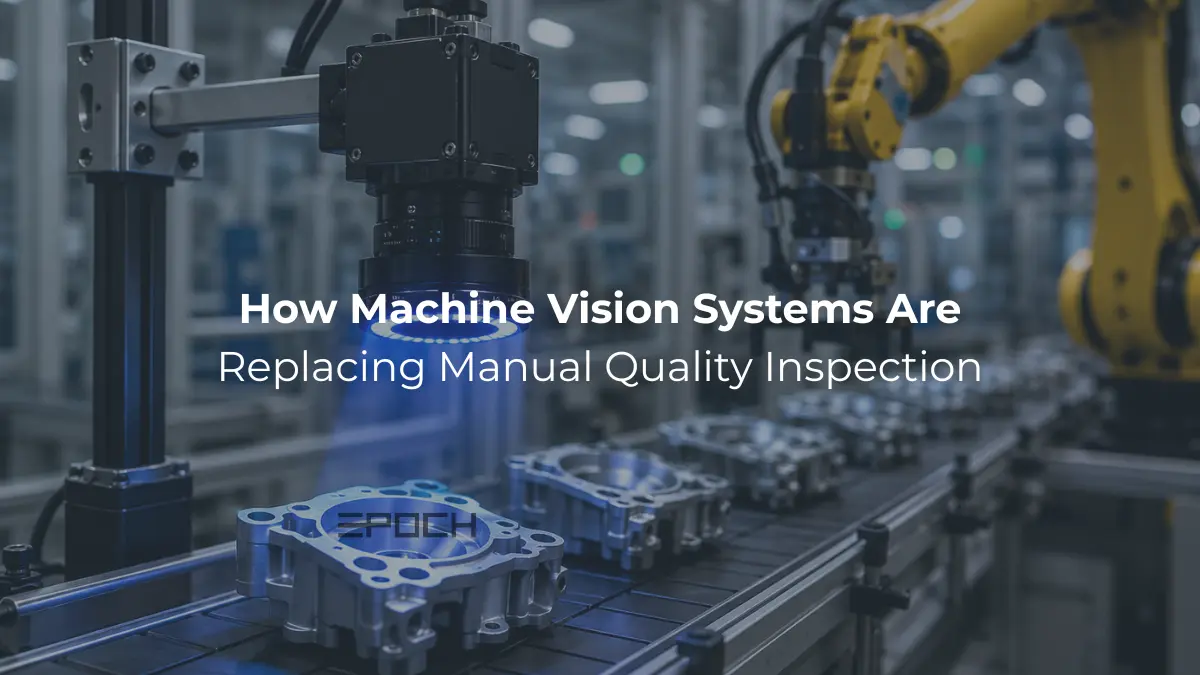
Although human expertise still plays an important role in manufacturing quality control, modern industrial facilities now require a level of speed, consistency, and precision that manual inspection alone cannot always achieve.
This is where machine vision systems are transforming industrial quality inspection.
Machine vision technology combines industrial cameras, advanced lighting systems, intelligent image processing software, automation platforms, and AI-based analytics to inspect products automatically with exceptional speed and accuracy.
As industries move toward smart manufacturing and Industry 4.0 environments, machine vision systems are becoming an essential part of modern industrial automation infrastructure.
Why Manual Quality Inspection Is Becoming Less Effective
Traditional manual inspection methods worked effectively when production volumes were lower and manufacturing systems operated at slower speeds. However, modern production environments have become significantly more demanding.
Today’s industrial facilities often operate:
- High-speed conveyor systems
- Continuous production lines
- Multi-shift manufacturing operations
- Precision assembly systems
- Automated packaging environments
In these conditions, manual inspection creates several operational limitations.
Human inspectors performing repetitive inspection tasks for long periods may experience:
- Fatigue
- Reduced concentration
- Visual inconsistency
- Delayed defect detection
- Variations between operators
Even experienced operators can occasionally miss small defects such as:
- Surface scratches
- Incorrect labels
- Assembly misalignment
- Missing components
- Dimensional variations
- Packaging inconsistencies
In industries such as pharmaceuticals, automotive manufacturing, electronics, food processing, and medical device production, even minor quality defects can create serious operational and financial consequences.
These issues may lead to:
- Product recalls
- Customer complaints
- Compliance violations
- Production interruptions
- Material waste
- Brand reputation damage
As production complexity increases, industries require inspection systems capable of operating continuously while maintaining consistent accuracy throughout the manufacturing process.
What Are Machine Vision Systems?
Machine vision systems are automated inspection technologies that use industrial cameras, intelligent software, lighting systems, and image-processing algorithms to inspect products during manufacturing.
Unlike manual inspection, machine vision systems analyze products automatically in real time with highly consistent inspection accuracy.
These systems can perform operations such as:
- Surface defect detection
- Barcode and QR code reading
- OCR text verification
- Label inspection
- Assembly verification
- Position and alignment checking
- Packaging inspection
- Dimensional measurement
- Color verification
- Component presence detection
Machine vision systems can inspect thousands of products per minute without slowing down the production line.
This level of inspection performance is becoming increasingly important in modern manufacturing environments where operational speed and product consistency directly affect profitability.
How Machine Vision Systems Reduce Human Error
One of the biggest advantages of machine vision technology is the reduction of human inspection variability.
Human inspection accuracy may vary depending on:
- Operator experience
- Working conditions
- Fatigue levels
- Lighting conditions
- Shift duration
Machine vision systems eliminate this inconsistency by inspecting every product using predefined inspection parameters and programmed decision logic.
For example:
- Pharmaceutical production lines can automatically verify labels, expiry dates, and packaging integrity.
- Automotive manufacturing systems can detect missing fasteners and assembly misalignment instantly.
- Electronics manufacturers can identify microscopic PCB defects using high-resolution industrial vision cameras.
This level of precision helps manufacturers reduce defective products while improving operational reliability across production environments.
High-Speed Inspection for Modern Production Lines
Manufacturing speed has become one of the biggest challenges in industrial quality control.
Manual inspection processes often create operational bottlenecks when production output increases.
Machine vision systems solve this problem by performing inspections within milliseconds.
Industrial cameras capture detailed product images while intelligent image-processing software analyzes inspection data in real time.
This allows manufacturers to:
- Increase production throughput
- Reduce inspection delays
- Improve manufacturing efficiency
- Reduce rework costs
- Minimize production waste
- Maintain inspection consistency at high speeds
Industries such as FMCG packaging, pharmaceuticals, food processing, automotive manufacturing, and semiconductor production benefit significantly from high-speed automated inspection systems.
24/7 Inspection Without Operational Fatigue
Unlike human inspectors, machine vision systems do not experience fatigue, reduced concentration, or inconsistent performance during long operating hours.
This makes automated inspection systems ideal for:
- Continuous manufacturing lines
- Multi-shift production environments
- Hazardous industrial operations
- High-volume manufacturing facilities
- Precision production systems
Automated inspection systems can operate continuously while maintaining the same inspection quality throughout the production cycle.
This becomes especially valuable for industries facing labor shortages, rising production demands, and increasing quality expectations.
Machine Vision Integration with Industrial Automation Systems
Modern machine vision systems are no longer standalone inspection devices. They are increasingly integrated with industrial automation infrastructure to create synchronized smart manufacturing environments.
Machine vision systems can integrate with:
- PLC systems
- SCADA platforms
- Industrial robots
- Conveyor systems
- Reject mechanisms
- Industrial sensors
- Smart manufacturing software
For example, when a defect is detected, the machine vision system can instantly communicate with the PLC to:
- Reject faulty products
- Stop the conveyor
- Trigger alarms
- Activate robotic sorting systems
- Record inspection data automatically
This level of automation improves production synchronization while reducing manual operational intervention.
Industries implementing advanced inspection infrastructure often work with a PLC Supplier in UAE to integrate machine vision systems into larger automation environments involving conveyors, robotics, industrial communication systems, and process monitoring platforms.
Consistent Product Quality Across Manufacturing Operations
Consistency is one of the most important goals in industrial manufacturing.
Customers expect every product to meet identical quality standards regardless of production volume or operating conditions.
Machine vision systems help maintain this consistency by inspecting every product using identical programmed inspection criteria.
This is especially important in industries such as:
- Pharmaceutical manufacturing
- Semiconductor production
- Automotive assembly
- Food and beverage processing
- Medical device manufacturing
- Electronics production
Consistent quality inspection improves:
- Product reliability
- Customer satisfaction
- Compliance performance
- Manufacturing stability
- Brand reputation
In addition, machine vision systems generate real-time inspection data that manufacturers can use for:
- Process optimization
- Predictive maintenance
- Production analytics
- Continuous quality improvement
AI and Deep Learning in Machine Vision Systems
Modern machine vision technology is increasingly powered by artificial intelligence and deep learning algorithms.
Traditional vision systems relied heavily on fixed inspection rules. However, AI-based machine vision systems can now:
- Learn from inspection patterns
- Detect complex defects
- Adapt to product variations
- Improve inspection accuracy over time
- Support predictive quality analysis
Deep learning inspection systems are especially useful in industries where defect variations are difficult to define using traditional rule-based inspection methods.
This allows manufacturers to create more intelligent and adaptive quality control systems.
ROI of Machine Vision Systems
Although some manufacturers initially view machine vision systems as a large investment, the long-term operational benefits are significant.
Reduced Product Defects
Automated inspection reduces defective products reaching customers and helps avoid costly recalls and warranty claims.
Reduced Labor Dependency
Automation reduces reliance on large manual inspection teams while allowing skilled personnel to focus on higher-value operations.
Lower Waste and Rework Costs
Early defect detection prevents defective products from moving further into the production process.
Improved Production Efficiency
High-speed automated inspection systems improve manufacturing throughput while reducing downtime.
Better Traceability and Compliance
Automated inspection records improve documentation, audit readiness, and process traceability.
Industries implementing smart inspection infrastructure often work with an industrial automation equipment supplier in UAE to support scalable automation integration and long-term manufacturing modernization.
The Future of Intelligent Quality Inspection
As Industry 4.0 technologies continue advancing, machine vision systems are becoming more intelligent, connected, and data-driven.
Modern smart factories increasingly rely on:
- AI-powered inspection systems
- Real-time manufacturing analytics
- Intelligent defect classification
- Automated decision-making systems
- Predictive quality monitoring
- Connected industrial automation platforms
Machine vision systems are no longer limited to defect detection alone. They are becoming a central part of intelligent manufacturing infrastructure designed to improve operational visibility, production consistency, and industrial scalability.
How Epoch International Supports Smart Manufacturing
Epoch International supports industries with advanced automation and machine vision solutions designed for modern manufacturing environments.
The company supports industrial requirements involving:
- Machine vision systems
- PLC automation
- Industrial control systems
- Smart manufacturing integration
- Industrial networking
- Process automation
- Intelligent monitoring systems
- Production modernization solutions
By combining automation expertise with industrial reliability, manufacturers can build smarter production environments capable of maintaining higher efficiency, better product quality, and long-term operational scalability.
Conclusion
Manual quality inspection has supported manufacturing industries for decades, but modern industrial environments now require faster, smarter, and more scalable inspection systems.
Machine vision technology is transforming industrial quality control by reducing human error, improving inspection speed, enabling continuous automated operation, and maintaining consistent product quality across manufacturing processes.
As industries continue moving toward intelligent automation and smart manufacturing infrastructure, machine vision systems are becoming a critical part of modern industrial production environments.