




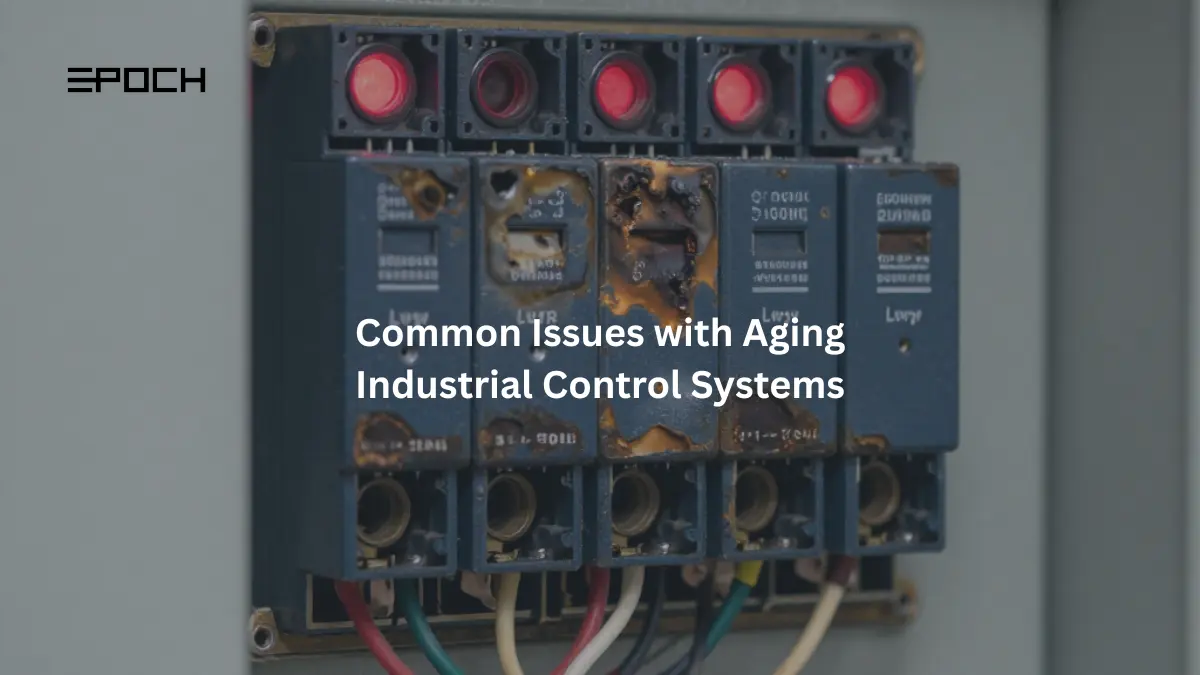
While these systems may still “run,” they often introduce hidden risks, ranging from unexpected downtime to safety concerns and integration challenges. As industrial au- tomation evolves toward smart factories and IIoT-driven environments, outdated control infrastructure becomes a serious bottleneck.
For industries working with PLC modules, control cards, and I/O systems, under- standing these issues is the first step toward modernization.
What Are Industrial Control Systems?
Industrial Control Systems (ICS) form the backbone of automation. They include:
- PLCs (Programmable Logic Controllers)
- I/O Modules
- HMIs (Human Machine Interfaces)
- Control Cards
- Sensors and field devices
These components work together to monitor and control industrial processes in real time. However, like any technology, they have a finite lifecycle, and performance degrades over time.
Key Problems with Aging Industrial Control Systems
Obsolete Hardware and Software
One of the biggest challenges is the use of end-of-life PLCs and control platforms.
- Legacy PLCs may no longer be supported
- Programming software may not run on modern systems
- Spare parts become difficult to source
This creates a dangerous dependency on used or refurbished components, increasing operational risk. With access to genuine PLC modules and control cards, industries can avoid unreliable aftermarket components and extend system life safely.
Component Degradation and Electrical Failures
Over time, physical components degrade due to:
- Heat stress
- Dust and corrosion
- Vibration in industrial environments This leads to:
- Failing relays and contactors
- Insulation breakdown
The result? Intermittent faults and unpredictable downtime.
Lack of Compatibility with Modern Systems
Modern factories rely on:
- IIoT platforms
- SCADA systems
- Ethernet-based communication (Profinet, Modbus TCP, EtherNet/IP)
Older systems often support only legacy communication protocols, making integration difficult.
This results in:
- Data silos
- Limited remote monitoring
- Reduced scalability
Impact: Your plant cannot fully benefit from smart manufacturing and predictive maintenance strategies.
Poor Documentation and Loss of Expertise
Many legacy systems suffer from:
- Missing electrical drawings
- Outdated PLC programs
- Lack of backups
Additionally, experienced engineers who designed the system may no longer be avail- able.
This creates a “tribal knowledge” dependency, making troubleshooting slow and risky.
Frequent Downtime and Troubleshooting Challenges
Aging systems often lack:
- Advanced diagnostics
- Real-time monitoring
- Fault logging capabilities Operators end up relying on:
- Trial-and-error troubleshooting
- Frequent system resets
This leads to increased downtime and production losses.
Reality Check: What seems like a “minor issue” can quickly escalate into hours or even days, of halted production.
Outdated Safety and Compliance Standards
Older control systems were not designed for modern safety requirements such as:
- Functional safety standards
- Emergency stop integration
- Safe torque off (STO) systems This exposes industries to:
- Worker safety risks
- Regulatory non-compliance
- Legal liabilities
Modern Requirement: Today’s systems must integrate safety PLCs, certified com- ponents, and proper labeling standards.
Increasing Cybersecurity Vulnerabilities
Legacy ICS were never designed for connected environments. As systems become net- worked:
- Vulnerabilities increase
- Unauthorized access risks rise
- Data integrity becomes compromised
Key Risk: Outdated systems can become entry points for cyber-attacks on critical infrastructure.
Business Impact of Aging Control Systems
Operating outdated systems doesn’t just affect engineering, it directly impacts business performance:
- Increased maintenance costs
- Unplanned downtime
- Limited production efficiency
- Higher spare part lead times
- Reduced competitiveness
In many cases, the cost of maintaining legacy systems exceeds the cost of modernization over time.
Signs Your System Needs Immediate Attention
You may be running an aging control system if:
- Spare parts are sourced from secondary markets
- PLCs or HMIs are discontinued
- Frequent manual resets are required
- No backup programs are available
- Troubleshooting takes longer than repair
These are clear indicators that your system is approaching failure-critical stage.
How Epoch International Supports Modernization
At Epoch International, we help industries bridge the gap between legacy systems and modern automation by supplying reliable and genuine components across multiple platforms. As a trusted industrial automation equipment supplier in UAE, we support industries with high-quality solutions that ensure long-term performance and compatibility.
Our expertise includes providing genuine PLC modules and control cards, making us a dependable PLC Supplier in Dubai for industries that require consistent and high-performance control systems. We also offer advanced operator interface solutions as a leading HMI Supplier in Dubai, UAE., enabling better monitoring, control, and data visibility across industrial processes.
In addition, we supply precision field devices and sensing components, positioning us as a reliable sensor supplier in Dubai for various industrial applications.
Conclusion
Aging industrial control systems may continue to operate, but they do so at a cost. From hardware failures and compatibility issues to safety risks and cybersecurity threats, the challenges are too significant to ignore.
Modernization is no longer a luxury, it is a necessity.
By investing in genuine automation spare parts and strategic upgrades, industries can:
- Improve operational stability
- Minimize unexpected failures
- Enable future-ready automation
Because in industrial automation, success isn’t just about keeping systems running— it’s about keeping them running reliably, safely, and efficiently.